

How to Choose the Right Goods Lift for a Factory or Warehouse in India
Table of Contents
Introduction
In a factory or warehouse, moving heavy materials between different levels is an important part of daily operations. When this movement depends heavily on manual handling, it can take more time, require additional manpower, and make material movement less efficient. A goods lift provides a practical solution by enabling the controlled vertical movement of raw materials, finished products, equipment, pallets, and other heavy loads.
However, choosing the right goods lift is not simply about selecting the highest load capacity. The ideal system needs to suit the type of materials being transported, frequency of use, available installation space, lifting height, loading method, safety requirements, and overall workflow of the facility. For businesses evaluating goods elevators for factories or warehouses in India, understanding these factors before making a purchase can help ensure the lift delivers reliable performance over the long term.
Stop moving heavy loads the hard way.
Get Your Lift SolutionWhat Is a Goods Lift?
A goods lift, also known as a goods elevator or freight lift, is designed primarily for transporting materials and equipment between different levels of a building. Unlike passenger elevators, which are designed around the movement and comfort of people, goods lifts are intended for demanding material-handling applications. They can be used across manufacturing facilities, warehouses, storage centres, industrial units, and other commercial environments where heavy goods need to move vertically.
The right configuration depends on the nature of the application, building layout, required capacity, and expected usage.
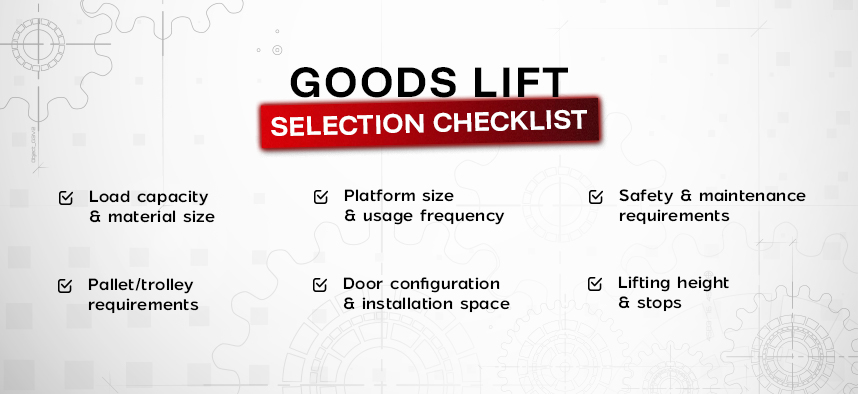
Before you finalise your lift, make sure you have answers to these questions:
1. Determine the Required Load Capacity
Load capacity should be one of the first considerations when selecting a goods lift for a factory. Start by identifying the heaviest load that the lift will need to carry rather than looking only at the average load.
Consider:
- Maximum weight of materials
- Average load per trip
- Weight of pallets or trolleys
- Weight of handling equipment
- Frequency of heavy-load movement
- Potential changes in future material-handling requirements
For example, a warehouse moving cartons may have very different requirements from a manufacturing facility transporting machinery, metal components, or heavy equipment. Selecting the appropriate capacity from the beginning helps ensure that the lift is suited to the actual operating environment.
2. Consider Platform Size
Weight is only one part of the equation. The dimensions of the goods being transported also matter. A lift platform should provide enough space for the materials, pallets, or handling equipment without making loading and unloading unnecessarily difficult.
Before finalising a warehouse goods lift, consider:
- Length and width of the largest load
- Pallet dimensions
- Trolley dimensions
- Door opening size
- Loading and unloading clearance
- Available shaft dimensions
A properly sized platform can make everyday material movement more convenient and help operators load goods more efficiently.
Heavy loads? Take them higher.
Talk to a Lift Expert3. Evaluate Lifting Height and Number of Stops
The required lifting height depends on the layout of the facility. A factory may need to move materials between the ground floor and production levels, while a warehouse may use multiple storage floors or mezzanine levels.
During planning, evaluate:
- Total travel height
- Number of floors or levels
- Number of stops
- Floor-to-floor height
- Loading and unloading points
These details help elevator manufacturers determine the appropriate lift configuration for the building. Site-specific planning is particularly important because the available shaft dimensions, structural conditions, and travel requirements can vary considerably from one facility to another.
4. Choose a Configuration That Fits Your Workflow
A goods lift should work with the existing material-handling process of your facility. Consider how goods currently move through the building. For example, if materials are transported using pallets or trolleys, the lift should allow convenient loading and unloading. If goods enter from one side and exit through another, a suitable door arrangement may improve workflow.
Depending on the application, businesses may need to evaluate:
- Single-side access
- Opposite-side access
- Door dimensions
- Loading platform arrangement
- Trolley or pallet access
- Position of loading and unloading areas
The goal is not simply to install a lift but to integrate it effectively into the movement of materials within the facility.
5. Prioritize Safety Features
Safety is one of the most important factors when selecting an industrial lift. A goods lift operates with potentially heavy loads and may be used frequently in demanding industrial environments. Its safety systems should therefore be appropriate for the intended application.
Depending on the lift design and applicable requirements, safety considerations may include:
- Door interlocking systems
- Overload protection
- Emergency stop functionality
- Safety brakes
- Limit switches
- Emergency alarm systems
- Suitable guarding and enclosure
- Controlled access to the lift
Safety should also extend beyond the lift itself. Proper loading practices, operator training, routine inspections, and preventive maintenance all contribute to safer operation. A responsible manufacturer should be able to explain the safety systems incorporated into the proposed configuration and how they support the intended application.
Your goods deserve a better way up.
Request a Quote6. Consider the Type of Goods Being Transported
Different materials can create different operational requirements. A facility handling packaged consumer goods may need a different solution from a plant transporting heavy engineering components.
Think about:
Raw Materials
Raw materials may be moved frequently between storage and production areas, making reliability and efficient loading important.
Finished Products
Finished goods may require frequent movement between production, storage, and dispatch areas.
Machinery and Equipment
Large or heavy equipment requires sufficient platform dimensions and load capacity.
Pallets and Trolleys
If pallets or trolleys are used, their dimensions and loading method should be considered during lift planning.
Understanding the material-handling process gives the manufacturer a clearer picture of the lift required.
7. Look at Manufacturing Capability
The company behind the lift matters. When evaluating elevator manufacturers in India, ask how much of the engineering and manufacturing process is handled within the organisation.
Important factors include:
- Manufacturing infrastructure
- Engineering capabilities
- Quality-control processes
- Component sourcing
- Testing procedures
- Customisation capabilities
- Installation expertise
- After-sales support
A manufacturer with strong engineering and production capabilities can better understand how different specifications affect the performance of the final system. EPIC Elevators, for example, highlights a structured manufacturing approach covering engineering, component production, testing, and preparation for installation.
Why the Right Goods Lift Matters
For a factory or warehouse, a goods lift is more than a vertical transportation system. It becomes part of the facility's material-handling infrastructure.
The right system can support:
- More organized material movement
- Easier transportation between levels
- Reduced dependence on manual handling
- Better workflow between production and storage areas
- Consistent movement of heavy materials
- More efficient use of multi-level facilities
The key is choosing a solution based on the actual requirements of the facility rather than selecting a standard model without considering the application.
The right lift starts with the right specs.
Discuss Your RequirementsWhy Choosing the Right Elevator Manufacturer Matters
The performance of a goods lift depends not only on its specifications but also on how it is engineered, manufactured, installed, and maintained. This is why choosing among elevator manufacturers in India should involve more than comparing product brochures.
Look for a manufacturer that can demonstrate:
- Relevant industrial experience
- Strong engineering capabilities
- Manufacturing infrastructure
- Quality-control systems
- Product testing
- Customised solutions
- Installation expertise
- Reliable after-sales support
For businesses searching for elevator manufacturers in Gujarat, local manufacturing capability and service availability can add another layer of practical value. The right manufacturer should act as an engineering partner, understanding the application first and then recommending a suitable goods lift configuration.
Final Thoughts
Choosing the right goods lift for a factory or warehouse in India requires a clear understanding of your facility, materials, workflow, and long-term operational requirements. Instead of choosing a lift based only on price or standard specifications, work with an experienced manufacturer that can evaluate your application and recommend a configuration built around your actual requirements.
With the right engineering approach and manufacturing support, a goods elevator can become a dependable part of your material-handling system, helping factories, warehouses, and industrial facilities move heavy loads between levels with greater efficiency and control.

