

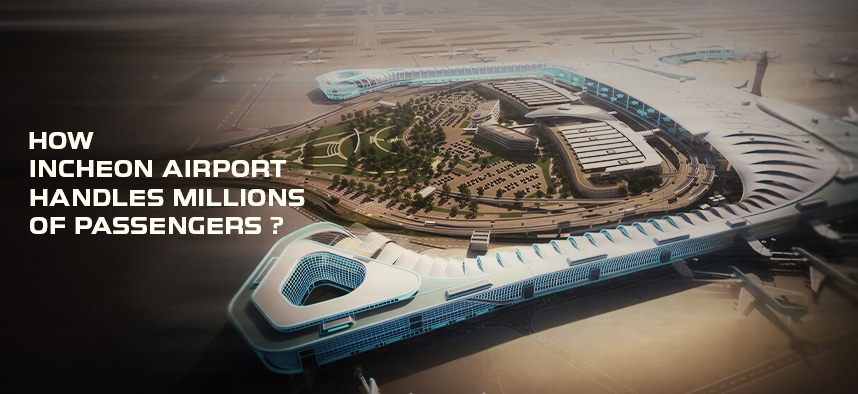
How Incheon Airport Handles Millions of Passengers
An international airport is a city in motion. Thousands of passengers arrive, depart, transfer between flights, and navigate multiple terminal levels, often within tight schedules. Managing this movement requires more than spacious terminals and clear signboards. It demands carefully planned infrastructure that keeps people moving efficiently, safely, and comfortably.
Incheon International Airport in South Korea offers a compelling case study in managing this complexity. For elevator manufacturing companies in India, its approach highlights the importance of passenger-flow planning, integrated transportation systems, accessibility, and long-term infrastructure development.
The latest 2026 figures underline the scale of the challenge. In the first half of 2026, Incheon Airport handled 38.39 million international passengers, marking a 6.3% increase compared with the same period in 2025. The airport also recorded a daily passenger high of 247,200 during the 2026 summer travel season. Following its Phase 4 expansion, its annual passenger-handling capacity reached 106 million passengers. These figures demonstrate why major transport hubs need infrastructure designed to accommodate substantial passenger volumes while maintaining efficient connections between terminals, transport facilities and essential services.
But how does an airport manage movement on this scale, and what can India's infrastructure sector learn from its approach?
Table of Contents
- Why Elevator Manufacturing Companies in India Must Look Beyond Equipment
- How Integrated Transportation Systems Keep Passengers Moving
- Why Passenger-Flow Planning Matters During Peak Travel Periods
- How Technology Supports Efficient Airport Operations
- Why Reliability and Maintenance Are Essential
- What India's Infrastructure Sector Can Learn from Incheon Airport
- How EPIC Elevators Supports Modern Vertical Mobility
- FAQs
- Conclusion
Why Elevator Manufacturing Companies in India Must Look Beyond Equipment
Managing millions of passengers requires more than installing additional elevators or escalators. The real challenge is ensuring that every part of the building supports the movement of people. Airports experience different traffic patterns throughout the day. Arriving flights, departure schedules, connecting passengers, and seasonal travel can create sudden increases in demand across specific areas.
Incheon Airport's expansion illustrates the importance of planning for long-term growth. Its Phase 4 development increased annual passenger-handling capacity to 106 million, providing additional infrastructure to accommodate growing demand. Although airport capacity and elevator capacity are different measures, the underlying principle is relevant to vertical mobility: infrastructure must be designed around expected usage, operational constraints, and future requirements.
Effective planning considers several factors:
- Passenger demand: Estimating how many people need to move between floors during peak periods.
- Equipment placement: Positioning elevators and escalators near important passenger routes and destinations.
- Accessibility: Providing convenient access for wheelchair users, elderly passengers, and people travelling with children or heavy luggage.
- Traffic distribution: Reducing the risk of queues and congestion around individual access points.
- Future expansion: Allowing for changing passenger volumes and potential building modifications.
For infrastructure developers, this means evaluating the complete movement requirement before selecting equipment. The objective is to create a system that works with the building rather than treating each elevator as an independent installation.
What Can India's Elevator Industry Learn from Incheon Airport?
Discover the InsightsHow Integrated Transportation Systems Keep Passengers Moving
An airport passenger's journey involves several interconnected stages. Travellers may move between terminal entrances, check-in counters, security checkpoints, departure lounges, baggage claim areas, and onward transport connections.
Each transition must fit into the larger passenger journey.
Incheon Airport's official transfer guidance illustrates this integration. Depending on their route, transferring passengers may need to complete security screening and move between terminal levels to reach shuttle train connections and onward boarding areas.
Different transportation systems support different parts of this journey.
Elevators for Vertical Access
Elevators connect floors and provide accessible routes for wheelchair users, elderly passengers, families, and travellers carrying luggage. Their capacity, location, and accessibility features influence how conveniently people can reach different terminal facilities.
Escalators for Continuous Passenger Movement
Escalators help passengers move between adjacent floors in busy public areas. When positioned appropriately, they support circulation between departure levels, arrival areas, and other high-traffic zones.
Moving Walks for Longer Distances
Moving walks help passengers cover lengthy horizontal routes with less physical effort. They are particularly useful in large terminals where check-in areas, boarding gates and other facilities may be spread across considerable distances.
These systems are most effective when their placement reflects the building's circulation plan.
For elevator manufacturers in India, the lesson is to consider how equipment interacts with entrances, corridors, waiting areas, and other transportation systems. A well-designed installation contributes to the entire passenger journey rather than serving as an isolated feature.
Why Passenger-Flow Planning Matters During Peak Travel Periods
Daily passenger averages do not tell the whole story of airport operations. Demand can rise sharply during holidays, seasonal travel periods, and concentrated arrival or departure waves. Incheon Airport's daily passenger record of 247,200 during the 2026 summer travel season illustrates the pressure that peak demand can place on airport operations. Managing such demand involves coordinated planning across passenger processing, security screening, parking, terminal access, and transportation connections.
The same principle applies to vertical mobility in large buildings. Passenger-flow analysis helps identify where queues may form, which floors experience concentrated demand, and whether the available transportation systems can support expected traffic.
Project teams should consider:
- The number of people expected to use each floor.
- The busiest periods and direction of movement.
- The location of entrances, exits, and waiting areas.
- The movement requirements of passengers with luggage or accessibility needs.
- Alternative routes when equipment is temporarily unavailable.
For elevator companies in India, these considerations are relevant to airports, hospitals, shopping centres, metro stations, and large commercial developments. The objective is not simply to move more people. It is to make movement predictable, accessible, and appropriate for the building's intended use.
How Technology Supports Efficient Airport Operations
Modern airports increasingly combine physical infrastructure with digital systems to improve passenger processing and operational coordination. Incheon Airport's sustainability reporting highlights smart-airport initiatives, including biometric passenger processing, automated security technologies, and data-supported operational systems. These initiatives form part of its wider approach to improving airport operations.
For vertical mobility, technology can support more efficient transportation and maintenance when selected appropriately for the application.
- Intelligent Elevator Controls: Destination-control systems allow passengers to select their destination before entering an elevator. The system can group passengers travelling to similar floors, helping reduce unnecessary stops in suitable applications.
- Equipment Monitoring: Where monitoring technology is deployed, operational teams can track equipment conditions, identify faults, and plan maintenance more effectively.
- Data-Informed Planning: Passenger movement data can help infrastructure planners understand usage patterns and identify areas where capacity, equipment placement, or circulation routes may need improvement.
However, technology alone cannot resolve poor infrastructure planning. Its effectiveness depends on appropriate equipment selection, correct configuration, installation quality, and ongoing maintenance. When evaluating elevator manufacturing companies in India, developers should consider the control technologies available, their suitability for the project, and the technical support required to maintain them.
Why Reliability and Maintenance Are Essential
In a high-traffic environment, equipment interruptions can affect passenger convenience and place additional pressure on alternative routes. An elevator that becomes unavailable may force passengers to take a longer route. An escalator outage in a crowded area can change pedestrian movement patterns and increase congestion around nearby access points. Reliability must therefore be considered from the equipment-selection stage.
Several factors support dependable operation.
- Appropriate equipment specifications: The selected system should match expected traffic, operating conditions, and the building's intended use.
- Preventive maintenance: Scheduled inspections help identify wear and developing faults before they cause more significant problems.
- Safety compliance: Equipment should meet applicable regulations and standards for its intended application.
- Service support: Access to qualified technicians and suitable replacement parts can help maintenance teams respond to issues.
- Operational planning: Buildings should consider alternative routes and servicing schedules when equipment needs to be taken out of service.
These requirements apply across airports, healthcare facilities, transit stations and commercial buildings. For project owners, the decision should extend beyond the initial purchase. Maintenance arrangements, service responsiveness and long-term equipment suitability also influence the overall value of an installation.
Can Your Next Project Handle Passenger Traffic on This Scale?
Find Out HowWhat India's Infrastructure Sector Can Learn from Incheon Airport
India's airports, metro networks, railway stations, hospitals, and commercial developments operate under different conditions from a major international aviation hub. Nevertheless, several principles from Incheon Airport's approach are relevant to the country's growing infrastructure sector.
- Design Around Actual Usage: Equipment capacity and placement should reflect the building's intended use, peak demand, and movement between floors.
- Integrate Different Transportation Systems: Elevators, escalators, and accessible pedestrian routes should connect logically with entrances, corridors, platforms, and other important destinations.
- Make Accessibility a Core Requirement: Inclusive movement should be incorporated into the original design rather than treated as an additional feature.
- Consider the Full Equipment Lifecycle: Installation costs are only one part of the decision. Maintenance, spare-parts availability, servicing requirements, and future upgrades also influence long-term performance.
- Plan for Changing Demand: Buildings should account for anticipated growth and consider whether their infrastructure can accommodate future modifications.
These principles provide a useful starting point for developers assessing elevator manufacturers for major projects. The right equipment must match the building's technical requirements, operating environment, and long-term objectives. For lift manufacturers, this also reinforces the importance of combining equipment suitability with accessibility, serviceability, and reliable operation. The key takeaway is that effective vertical mobility begins with understanding how people use a building. Equipment selection follows from that understanding.
How EPIC Elevators Supports Modern Vertical Mobility
The lessons from Incheon Airport extend beyond aviation. Whether a building serves residents, patients, shoppers, or office occupants, its mobility requirements depend on its layout, expected usage, and accessibility needs.
EPIC Elevators offers a range of vertical mobility solutions for different applications, including passenger elevators, hospital elevators, goods elevators, scenic elevators, bungalow elevators, and escalators. Our passenger elevator portfolio includes automatic door systems and microprocessor-based controllers. EPIC also offers Destination Dispatch System technology for suitable applications, helping group passengers travelling to similar floors.
For residential developments, bungalow elevator solutions address the requirements of private homes, while other products serve commercial and institutional environments. We also provide consultation, installation, and maintenance support to help customers identify solutions appropriate for their projects.
Frequently Asked Questions
1. What should you look for in elevator manufacturing companies in India?
Look for engineering capabilities, appropriate product options, manufacturing quality, compliance with applicable safety standards, installation expertise, and ongoing maintenance support. The supplier should be able to explain how its proposed solution meets the building's requirements.
2. How do you select an elevator system for a high-traffic building?
Begin with an assessment of occupancy, peak-hour movement, floor count, accessibility requirements, and available space. Then evaluate capacity, speed, control systems, maintenance requirements, and lifecycle costs before making a decision.
3. What makes elevator manufacturers in India suitable for commercial projects?
Commercial projects require equipment suited to their occupancy, daily traffic, and operating conditions. Developers should assess technical expertise, product suitability, installation experience, and the supplier's ability to provide ongoing service support.
4. How can elevator companies in India improve building efficiency?
They can recommend appropriately sized equipment, help integrate elevators into building plans, and provide suitable control and maintenance solutions. Actual performance depends on the design, configuration, and use of the installed system.
5. Why do airports use elevators, escalators, and moving walks together?
Each system serves a different purpose. Elevators provide vertical access, escalators move passengers between adjacent floors, and moving walks help people travel along longer horizontal routes. Using them together supports different passenger requirements.
Conclusion
Incheon Airport demonstrates the scale and coordination required to manage modern air travel. Its first-half 2026 international passenger traffic reached 38.39 million, while its daily passenger record during the summer travel season highlighted the pressure that peak demand can place on airport operations. The wider lesson is that efficient passenger movement depends on thoughtful capacity planning, integrated transportation systems, accessibility, appropriate technology, and dependable maintenance.
For developers evaluating elevator manufacturing companies in India, these principles provide a practical framework for selecting equipment that meets current needs while supporting long-term building performance.

